This Deliverable D1.2 proposes a clear framework to assess compliance with current safety and
environmental standards and regulation of the future OPTHYCS solution. The document includes an
analysis of current regulatory framework, transcending several domains as safety and environment
protection, and includes laws, regulations, codes and standards.
The picture below lists the different documents that have been review in this analysis, and the
different subsection contains a summary of the main requirements that the OPTHYCS SYSTEM will
need to meet.
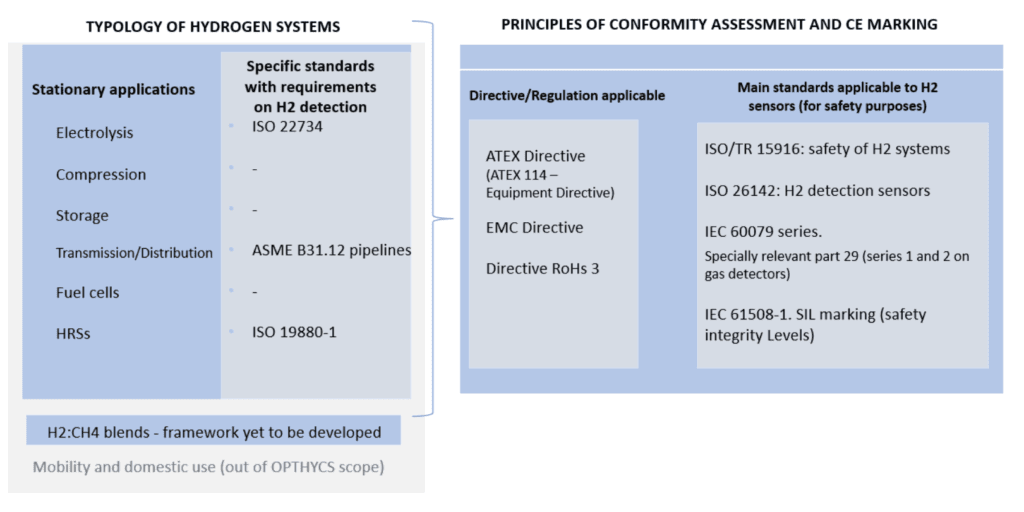
We have concluded that there is already a framework in place in terms of requirements for sensors
used for H2 detection for safety purposes. The document lists main requirements and includes main
conclusions after each sub-section throughout the document, outlining the specific requirements that
must be met by the sensors before market deployment.
However, we have identified a lack of guidance on H2 leak detection and quantification to minimize
climate impact of H2 use. Common European and International hydrogen standards on this topic will
be key to the successful roll out of hydrogen technologies and applications. Also, safety aspects such
as explosion prevention for H2:CH4 blends need also specific attention in the short term.
It’s important to note that H2 sites may have diverse sensoring requirements of different parameters.
One notable advantage of FO sensors is their adaptability. By placing them at the right distance, a
single system can be tailored to meet the specific needs of each site, efficiently monitoring various
critical parameters.
Following the completion of the project’s lab and validation tests, we will conduct a comprehensive
re-assessment of the regulatory framework. This critical step may entail a more thorough analysis,
taking into account the project’s findings and outcomes. We will continue our work to fine-tune the
requirements of the system as we progress on the system’s finalization and market launch.